
Why Some Home Arcade Machines Feel Cheap
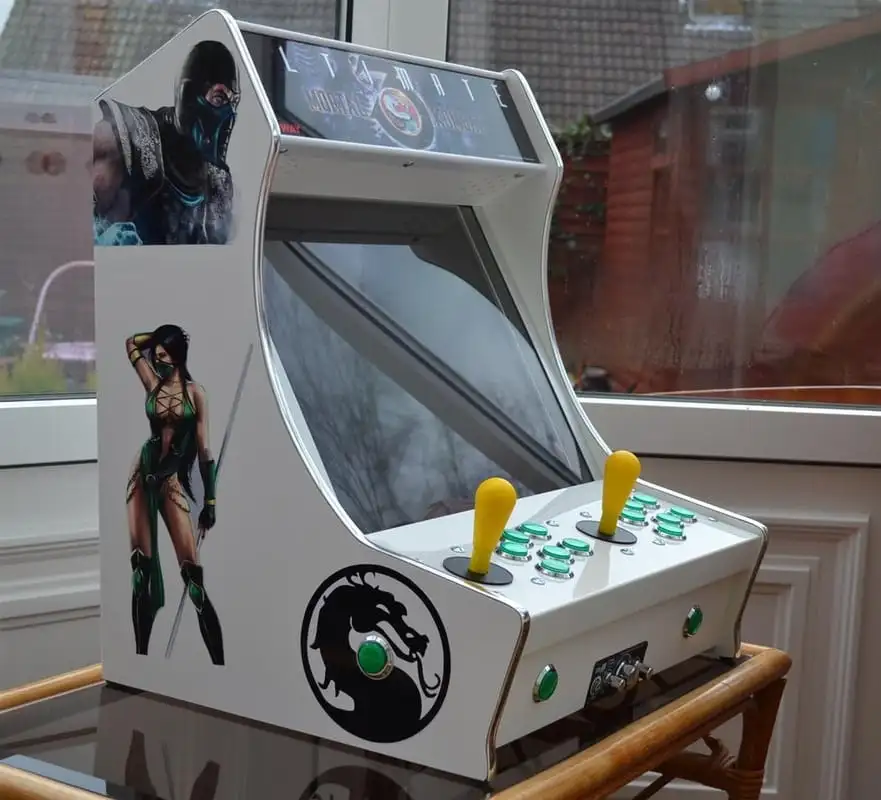
If you grew up during the golden age of arcades, you probably remember that arcade machines felt different from home consoles. The controls were more responsive. The sound had more impact. Even the cabinet itself felt solid and alive.
Part of the authentic arcade experience comes from the simplicity and gameplay-focused design that made retro gaming so memorable.
Today, thousands of “home arcade machines” are sold online — but many of them miss what made the original arcade experience special in the first place.
At first glance, they may look impressive in photos. Bright marquees, colorful artwork, thousands of games advertised in giant numbers. But once you actually play them, something often feels wrong.
After building and restoring arcade systems since 1985, I’ve learned that authenticity isn’t created by marketing. It comes from details most people never notice until they experience them firsthand.
I also created a complete arcade categories page where you can browse different arcade machine styles, gaming systems, and custom build options.
Cheap Controls Instantly Ruin the Experience
One of the biggest problems with low-quality arcade machines is the controls.
Many mass-produced cabinets use inexpensive joysticks and buttons with poor responsiveness, inconsistent switches, or incorrect travel distance. Some feel loose. Others feel stiff or inaccurate.
Classic arcade games were designed around precise physical feedback. Fighting games, shooters, and platformers depend on accurate directional inputs and responsive buttons. Even small delays or poor microswitch quality change how the games feel.
A proper arcade machine should feel deliberate and responsive — not vague or toy-like.
That’s why I pay close attention to control tuning, internal wiring, button feel, and joystick response in every machine I build, including my handcrafted Bartop Arcade Machine systems.
Most Cabinets Ignore Proper Screen Presentation
Another common issue is display configuration.
Many modern arcade cabinets stretch older games to fill widescreen displays, destroying the original proportions. Pixel art becomes distorted, scanlines disappear, and the games lose the visual balance they were designed around.
Classic arcade games were created for CRT displays with specific resolutions, aspect ratios, and visual characteristics. Without proper calibration, modern LCD panels can make retro games look overly sharp, cold, or artificial.
Projects like MAME were originally created to preserve arcade hardware and gaming history.
A good arcade setup should preserve:
- correct aspect ratios
- balanced scaling
- smooth motion
- natural scanline presentation
- proper color balance
The goal is not to exaggerate the “retro effect,” but to recreate the visual feeling people actually remember from arcades.
For players looking for a more authentic CRT-style setup, I also wrote about how I configure MAME Arcade systems for modern displays.
Build Quality Matters More Than Most People Realize
Many low-cost cabinets are designed primarily to look good in product photos.
Thin materials, weak internal mounting, poor ventilation, loose wiring, and lightweight construction may not be obvious immediately — but they become noticeable over time.
A real arcade machine should feel stable and durable. The cabinet should not flex during gameplay. Controls should remain reliable after years of use. Cooling and power management should be properly designed for long gaming sessions.
For me, craftsmanship has always been just as important as appearance.
Every machine I build is handcrafted individually, assembled carefully, tested before shipping, and designed for long-term reliability rather than short-term novelty.
“Plug & Play” Rarely Means Truly Plug & Play
A lot of arcade systems advertise themselves as plug-and-play, but in reality they often require constant tweaking, troubleshooting, software fixes, or controller remapping.
That becomes frustrating very quickly.
A proper home arcade machine should feel effortless:
- fast startup
- stable front-end
- reliable controls
- properly configured software
- intuitive navigation
- consistent performance
The system should disappear into the experience instead of constantly reminding you that you’re using a computer.
That philosophy has also shaped my Batocera Arcade Console for TV systems, designed for simple plug-and-play retro gaming on modern televisions.
Authenticity Comes From Balance
Ironically, the best arcade machines usually don’t try too hard to look “retro.”
Authenticity comes from balance:
- responsive controls
- correct screen presentation
- solid cabinet construction
- reliable performance
- proper audio tuning
- thoughtful finishing
Small details create the overall feeling people remember.
When everything is configured correctly, the machine stops feeling like an emulator project and starts feeling like a real arcade cabinet again.
Why I Still Build Arcade Machines Today
I started working with arcade hardware in 1985 because I genuinely loved arcade games and the engineering behind them.
That passion never disappeared.
Today, every machine I build is still handcrafted individually, tested personally, and supported directly by me after delivery. I focus on creating arcade systems that feel authentic, reliable, and enjoyable for years to come — whether it’s a compact bartop, a vertical cabinet, or a full retro gaming setup for home use.
Because in the end, people rarely remember how many games a machine had.
They remember how it felt to play.
If you have questions about a build or want advice on choosing the right arcade setup for your space, feel free to get in touch.