
How to Make Your Own Arcade Machine at Home
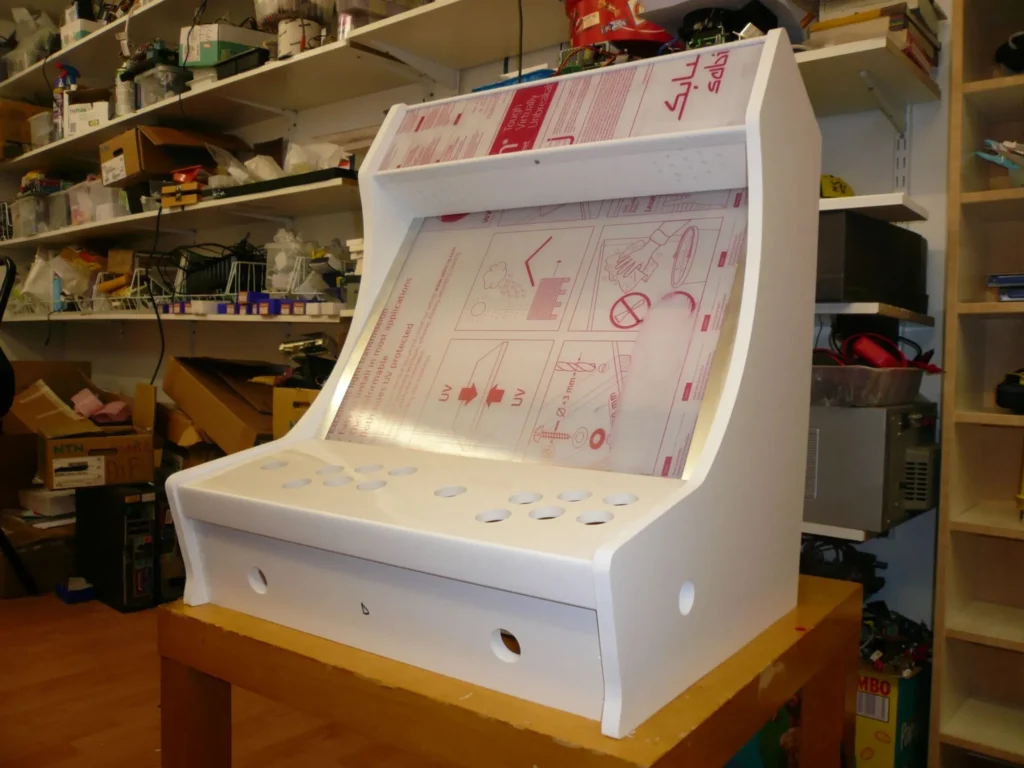
Building your own arcade machine is one of the most rewarding DIY projects for retro gaming enthusiasts. Today, thanks to modern mini PCs, Batocera systems, Hyperspin frontends, and plug-and-play arcade hardware, creating a custom arcade cabinet at home is more achievable than ever.
However, after more than 40 years restoring and building arcade systems, we can honestly say that building a good arcade machine is often much more complicated than most people expect. Every custom arcade cabinet starts with a simple idea, but achieving authentic arcade gameplay requires the right hardware, controls, monitor setup, and patience.
This guide will help you avoid some of the most common mistakes beginners make when building their first DIY arcade machine.
What You Need to Make Your Own Arcade Machine
A typical DIY arcade cabinet requires:
| Component | Purpose |
|---|---|
| Arcade cabinet or bartop shell | Main structure |
| Arcade controls and buttons | Gameplay input |
| Monitor or IPS display | Video output |
| Mini PC / Raspberry Pi / Pandora Box | Gaming hardware |
| Speakers and amplifier | Arcade audio |
| Frontend software | Game navigation |
| Power supply and wiring | Internal electronics |
Many builders today prefer compact Mini PCs combined with Batocera or Hyperspin setups because they offer significantly better performance and compatibility compared to older Raspberry Pi systems.
You can also explore our Free Arcade Cabinet DIY Guide
The Biggest Mistakes Beginners Make
Cheap Arcade Controls
One of the most common mistakes is buying low-quality arcade joysticks and buttons. Cheap controls often feel inaccurate, become loose quickly, and can completely ruin the arcade experience.
Professional arcade controls such as genuine SANWA parts offer significantly better responsiveness and durability.
| Cheap Arcade Controls | Professional Arcade Controls |
|---|---|
| Inconsistent inputs | Accurate gameplay |
| Poor durability | Long lifespan |
| Loose joystick feel | Tight arcade response |
| Low-quality microswitches | Reliable arcade switches |
You can see examples on our Bartop Arcade Machines page
Using Heavy MDF Cabinets
MDF remains popular for DIY arcade projects because it is inexpensive and easy to cut. However, many first-time builders underestimate how heavy arcade cabinets become once the monitor, controls, speakers, and hardware are installed.
Large MDF cabinets can become extremely difficult to move and transport, especially full-size arcade builds.
This is one reason why many modern arcade builders now prefer lighter materials combined with stronger cabinet assembly systems.
Choosing the Wrong Monitor
The display is one of the most important parts of any arcade machine.
Many modern widescreen monitors simply do not feel correct for classic retro arcade games. In our experience, professional 5:4 IPS displays provide the best balance between authentic arcade proportions, viewing angles, color accuracy, response time, and long-term reliability.
NOTE: If you still decide to use a widescreen monitor for your arcade project, the emulator settings should always preserve the original aspect ratio of retro arcade games. Avoid stretching classic games to full widescreen format, as this can distort graphics and gameplay visuals.
Many modern frontends and emulators also support custom bezels and side artwork overlays, allowing unused screen areas to display arcade-themed graphics while preserving the correct game proportions.
| Display Type | Arcade Experience | Colors & Viewing Angles | Response Time | Notes |
|---|---|---|---|---|
| 16:9 Widescreen LCD | Acceptable with correct aspect ratio settings | Usually good | 1ms–5ms | Avoid stretched gameplay |
| 4:3 CRT Monitor | Most authentic arcade experience | Excellent natural scanlines | Instant response | Heavy and harder to maintain |
| 5:4 IPS Monitor | Best modern arcade solution | Excellent colors and viewing angles | 5ms typical | Ideal balance for retro gaming |
| Cheap TN Panels | Not recommended | Poor viewing angles and washed colors | Fast response | Lower image quality |
For most modern DIY arcade projects, a quality 5:4 IPS monitor remains one of the best choices due to its color accuracy, wide viewing angles, reliable performance, and arcade-friendly proportions.
You can see examples in our Vertical Arcade Cabinets,
and also on the Multi-Game Arcade Machines
Choosing the Right Hardware for Your Arcade Machine
There is no perfect setup for everyone. It depends on your budget, technical experience, and the type of games you want to play.
Mini PC + Batocera
One of the best modern solutions for DIY arcade projects.
Advantages:
- Excellent emulator compatibility
- Easy updates
- Better performance than older Raspberry Pi systems
- Supports modern frontends and shaders
- Beginner-friendly compared to Hyperspin
One of the best modern solutions for DIY arcade projects.
You can also explore our Batocera Arcade Console for TV
Hyperspin Systems
Hyperspin remains one of the most visually impressive arcade frontends available.
However, many beginners underestimate how difficult Hyperspin setups can become. Configuring themes, emulators, wheel artwork, videos, controls, and databases can require significant time and patience.
Our Hyperspin Arcade Systems page shows what a professionally configured setup can look like.
Pandora Box Systems
Pandora Box systems are popular because they are simple and affordable. They allow many people to enjoy arcade gaming without needing advanced technical knowledge.
Modern custom operating systems such as PandoryDX Ultimate have also significantly improved the experience and performance of Pandora hardware.
You can learn more on our Pandora Box Arcade Machine page:
Hardware Comparison Table
| System | Difficulty | Performance | Best For |
|---|---|---|---|
| Raspberry Pi | Easy | Medium | Simple retro builds |
| Mini PC + Batocera | Medium | Excellent | Modern DIY arcades |
| Hyperspin PC | Advanced | Excellent | Premium arcade builds |
| Pandora Box | Very Easy | Good | Plug-and-play gaming |
The Hardest Part of Making Your Own Arcade Machine
This depends entirely on the person building the arcade machine.
For some people:
- cabinet construction is the hardest part
For others:
- wiring
- monitor mounting
- frontend setup
- emulator configuration
- artwork installation
can quickly become frustrating.
Building a real arcade cabinet usually requires a combination of woodworking, electronics, gaming knowledge, software configuration, and patience.
DIY Arcade Costs
Many beginners underestimate how quickly costs can increase.
| Component | Estimated Cost |
|---|---|
| Arcade controls | €80–€250 |
| Monitor | €100–€300 |
| Mini PC or hardware | €150–€600 |
| Wood and materials | €100–€400 |
| Speakers and amplifier | €30–€100 |
| Artwork and finishing | €50–€300 |
Depending on the build quality, many DIY arcade projects can end up costing significantly more than initially expected.
Is Building Your Own Arcade Machine Worth It?
For many retro gamers, absolutely.
Building your own arcade machine can be one of the most rewarding gaming projects you will ever complete. It allows you to recreate part of the arcade experience many people remember from their childhood.
At the same time, DIY arcade projects are often more time-consuming and expensive than people initially expect. Between controls, monitors, hardware, artwork, software setup, and cabinet materials, costs can increase quickly.
This is one reason why some enthusiasts eventually choose professionally handcrafted arcade systems instead of building everything from scratch.
Final Thoughts
Arcade machines are more than just gaming systems. For many people, they represent nostalgia, memories, and a connection to the golden age of gaming.
Whether you decide to build your own DIY arcade cabinet or purchase a professionally handcrafted system, preserving the arcade experience for future generations is what truly matters.
You can also explore our:
for more retro gaming inspiration and arcade machine ideas.