
Custom Arcade Machine – Built Around You, Not Around Mass Production
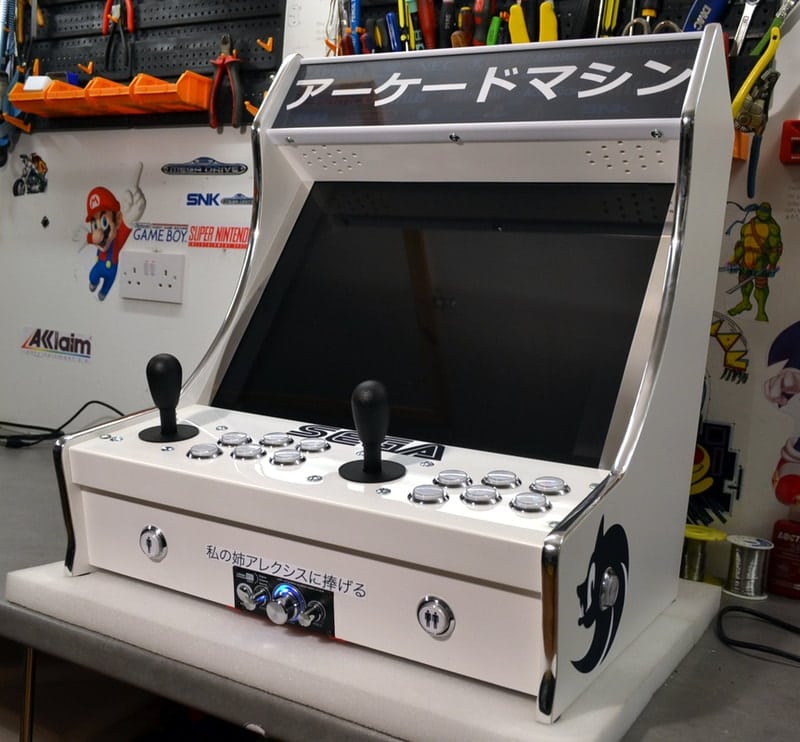
For many people, a custom arcade machine simply means choosing different artwork or changing the button colours.
For me, it means something completely different.
It means building an arcade cabinet from the ground up using carefully selected materials, proven components, and decades of experience to create something that feels authentic every time you play.
After building arcade machines since 1985, I’ve learned that the best cabinets aren’t defined by flashy artwork or the number of games they contain. They’re defined by hundreds of small decisions that most people never see—but experience every time they touch the controls.
Every cabinet I build starts with the same goal:
To create the kind of arcade machine I would proudly build for my own home and family.
That philosophy influences every stage of the process—from selecting the hardware and cutting the cabinet panels to tuning the controls, testing the audio, and playing every machine before it leaves my workshop.
If you’re looking for a mass-produced product built as quickly as possible, this article probably isn’t for you.
But if you want to understand what separates a handcrafted custom arcade machine from an ordinary cabinet, you’re in the right place.
Why Choose a Custom Arcade Machine?
Today’s market offers hundreds of arcade cabinets.
Some are inexpensive flat-pack kits.
Some are mass-produced overseas.
Others are designed primarily as decorative furniture rather than serious gaming machines.
A true custom arcade machine is different.
Instead of adapting your expectations to fit a factory-built product, the cabinet is built around the experience you actually want.
That doesn’t always mean changing the cabinet dimensions or redesigning every panel. In my workshop, the cabinet dimensions have been refined over many years to provide the best balance between comfort, stability, and authentic arcade gameplay.
Customization comes from the details that matter.
For example, customers can choose:
- artwork themes
- joystick colours
- ball tops or bat tops
- button colours
- illuminated controls
- operating systems
- game collections
- front-end software
- control layouts
- premium hardware options
- and many other finishing touches.
These choices transform a standard cabinet into something personal while preserving the engineering and reliability developed through decades of experience.
A Custom Arcade Machine Is More Than Custom Artwork
One of the biggest misconceptions is that a custom arcade machine is simply a cabinet with personalised graphics.
Artwork is certainly important.
It gives every machine its own personality.
But beautiful artwork alone doesn’t improve gameplay.
What truly defines a premium custom cabinet are the things hidden beneath the artwork:
- carefully selected PC hardware
- genuine arcade controls
- premium IPS displays
- professional audio components
- reliable power supplies
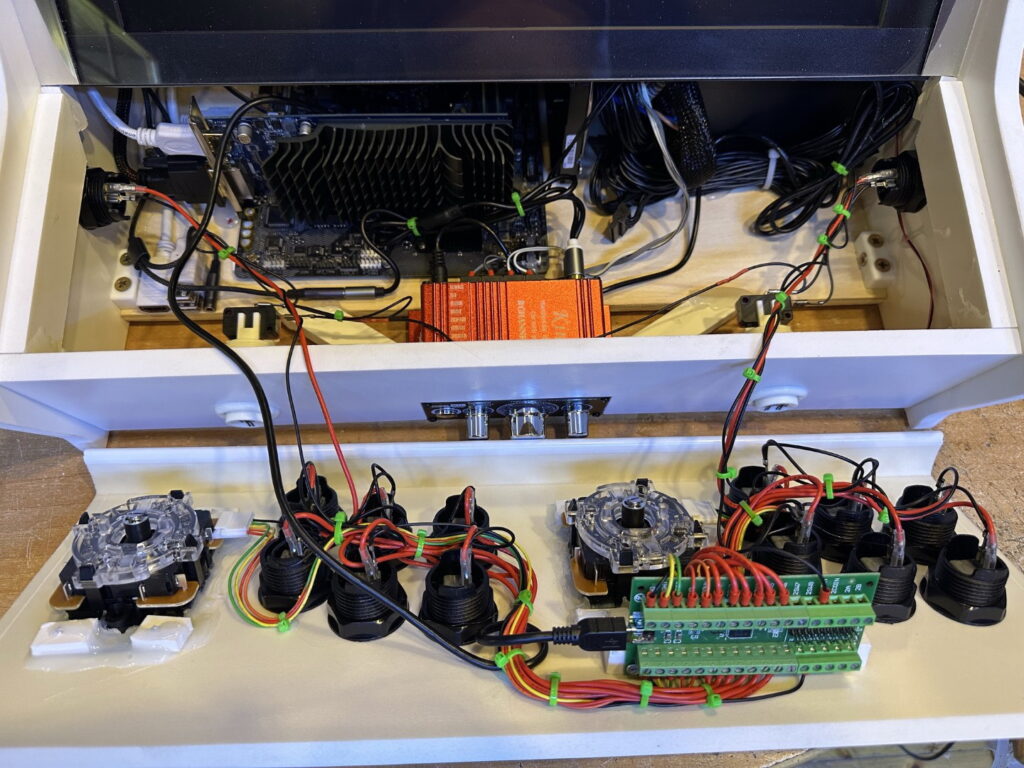
- robust internal wiring
- clean cable management
- cabinet rigidity
- accurate control calibration
- extensive testing before delivery.
Many of these details remain completely invisible once the cabinet is finished.
Ironically, they’re also the details that determine how the machine will perform after thousands of hours of gameplay.
This is one of the reasons I wrote our guide explaining what separates a premium arcade cabinet from an ordinary one.
If you’re investing in a custom machine, understanding what happens inside the cabinet is every bit as important as choosing the artwork on the outside.
Every Cabinet Starts From Raw Materials
Unlike many commercially available arcade cabinets, my machines don’t begin as pre-made flat-pack kits waiting to be assembled.
Every cabinet begins as rigid high-density PVC foam board.
After many years of refining templates, dimensions, and construction methods, each panel is individually measured, cut, routed, sanded, and prepared by hand.
I deliberately chose rigid PVC instead of MDF many years ago.
While MDF remains common because it’s inexpensive and easy to machine, I found it to be heavier, more vulnerable to moisture, and less suitable for creating a cabinet designed to last for many years.
Rigid PVC offers several important advantages:
- moisture resistance
- lower weight
- dimensional stability
- excellent durability
- a smooth professional finish
- long-term structural integrity.
Every cut, every routed edge, and every panel contributes to the finished cabinet.
This stage takes time.
There are no shortcuts.
Because once the cabinet is assembled, precision cannot be added later—it has to be built in from the very beginning.
How Every Custom Arcade Machine Is Built
People often ask me why building a custom arcade machine takes one to two weeks instead of a single day.
The answer is simple.
A premium arcade cabinet isn’t assembled.
It’s built.
Every machine follows the same process, refined through decades of experience, with every stage designed to maximise reliability, performance, and long-term durability.
1. Every Component Is Carefully Selected
Long before I begin building a cabinet, I select every individual component.
Over the years I’ve tested countless electronic parts, arcade controls, displays, amplifiers, power supplies, and computer hardware.
Some looked impressive on paper.
Some were inexpensive.
Many simply didn’t meet my standards.
Only the components that consistently proved themselves through years of real-world use became part of my arcade machines.
I don’t choose parts because they’re fashionable.
I choose them because I know exactly how they’ll perform after thousands of hours of gameplay.
That experience cannot be learned from specifications alone.
It comes from decades of building, testing, repairing, and constantly improving arcade machines.
2. Electronic Components Are Tested Before Installation
Many builders only discover faulty hardware after the cabinet has already been assembled.
I prefer to find problems before they ever reach the cabinet.
Each electronic component is individually tested before installation.
This includes verifying the computer hardware, power supply, audio amplifier, control electronics, display, and every critical subsystem.
Testing components separately significantly reduces the chance of hidden faults appearing later.
It also allows me to eliminate potential issues before the cabinet becomes much more difficult to service.
Reliability starts long before the first screw is tightened.
3. Building the Cabinet From Raw PVC
Once every component is ready, construction begins.
Each cabinet starts as rigid high-density PVC foam board.
Using templates refined over many years, I carefully cut every panel before shaping the edges with a router and finishing them by hand.
This stage requires patience.
Even tiny inaccuracies become visible once the cabinet is assembled.
That’s why every edge, every joint, and every surface is prepared before assembly begins.
Unlike mass production, nothing is rushed.
Each cabinet is built individually, allowing me to focus on precision instead of speed.
4. Precision Assembly Matters More Than Most People Realise
A cabinet may look perfectly square while still being unstable during gameplay.
This is something many buyers don’t notice until they actually start playing.
One of my priorities during assembly is making sure the cabinet sits perfectly flat on the surface.
During arcade games, players naturally apply pressure to the joystick.
If the cabinet rocks, twists, or shifts while playing, the entire experience feels cheap, regardless of how powerful the hardware inside may be.
Every cabinet is carefully assembled and checked to ensure maximum rigidity and stability.
When finished, it should feel like it’s firmly planted in place—not something that moves every time you perform a special move in Street Fighter or dodge bullets in a fast-paced shoot ’em up.
Small details like this often separate handcrafted arcade machines from mass-produced alternatives.
5. Installing the Electronics
Only after the cabinet itself meets my standards do I begin installing the electronics.
Every component is positioned carefully, not simply to fit inside the cabinet, but to maximise reliability, airflow, accessibility, and long-term serviceability.
The computer hardware, display, amplifier, speakers, encoder, power distribution, cooling system, and internal wiring are all installed individually.
Clean cable management isn’t just about appearance.
Organised wiring improves airflow, simplifies future maintenance, reduces the risk of accidental damage, and reflects the same attention to detail applied throughout the entire build.
Most customers will never see the inside of their cabinet.
I still build it as if they will.
6. Every Control Is Individually Configured
The controls are one of the most important parts of any arcade machine.
They are the only physical connection between the player and the game.
For that reason, I never treat them as a simple installation step.
Every joystick, button, and hotkey is individually configured and tested.
The Ultimarc I-PAC2 encoder is programmed to ensure responsive, reliable input with virtually imperceptible latency, providing the precise feel expected from authentic arcade controls.
The goal isn’t simply to make every button work.
The goal is to recreate the natural feel of an original arcade machine.
Whether you’re performing complex fighting game combinations or making tiny adjustments in classic shoot ’em ups, the controls should disappear from your thoughts and simply become part of the game.
Built Like It Was for My Own Family
Every custom arcade machine that leaves my workshop carries something far more valuable than a collection of electronic components.
It carries my reputation.
After building arcade machines for almost four decades, I’ve learned that customers rarely remember how many games a cabinet contains or how powerful the processor was.
What they remember is how the machine feels every time they switch it on.
That’s why I approach every build exactly as if I were making it for my own home and family.
If something doesn’t feel right…
If a button isn’t perfectly aligned…
If the audio isn’t completely clean…
If the cabinet isn’t perfectly stable…
It isn’t finished.
There is no production schedule that takes priority over quality.
I would rather spend another hour adjusting a cabinet than spend years knowing I shipped something below my own standards.
That philosophy has guided every arcade machine I’ve built since 1985.
Why I Only Use Proven Arcade Components
One of the easiest ways to reduce the cost of an arcade cabinet is to use cheaper components.
Many manufacturers do exactly that.
On paper, the differences often seem insignificant.
In practice, they affect almost every aspect of the arcade experience.
That’s why I only use components that have proven themselves through years of real-world testing.
Not because they’re the most expensive.
Because I know how they’ll perform after thousands of hours of gameplay.
Every component has been chosen for a reason.
Premium IPS displays provide consistent colours and wide viewing angles.
Original Sanwa and Seimitsu controls deliver the precision expected by experienced arcade players.
The Ultimarc I-PAC2 encoder offers exceptionally low input latency and long-term reliability.
High-quality audio amplifiers and carefully selected speakers produce clear sound without distortion.
Reliable PC hardware provides the performance required for demanding emulators, CRT shaders, and modern arcade systems.
Each individual component contributes to the final experience.
If one part is compromised, the entire cabinet is compromised.
Every Machine Is Tested Like a Real Arcade Machine
Building the cabinet is only part of the process.
Testing is just as important.
Once assembly is complete, I don’t simply verify that every button works.
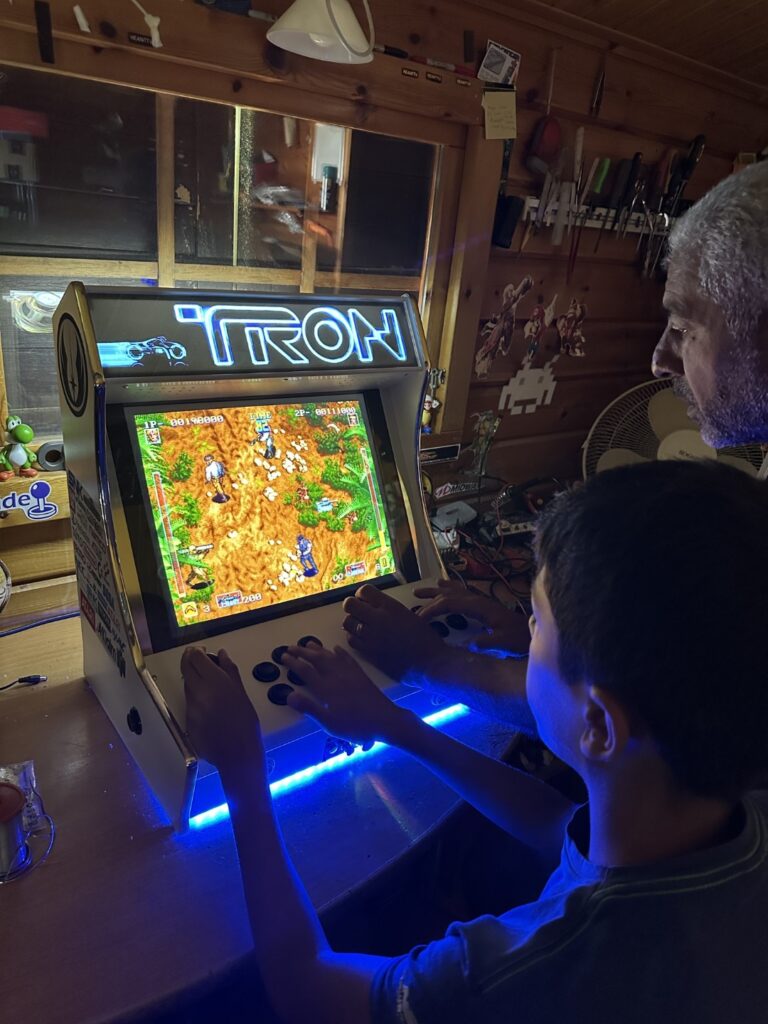
I play it.
Different genres reveal different characteristics.
Fighting games test joystick precision and rapid button combinations.
Shoot ’em ups expose even the smallest control inaccuracies.
Platform games demand responsive movement and consistent timing.
Front-end navigation, emulator configuration, audio balance, hotkeys, and system stability are all verified under real playing conditions.
The objective isn’t simply to confirm that the cabinet functions.
The objective is to make sure it feels exactly like a proper arcade machine should.
The Final Test Before Shipping
Even after every function has been tested, the process isn’t finished.
Every completed cabinet remains powered on continuously for approximately 24 to 48 hours.
This extended burn-in period allows every internal component to operate under continuous load before the machine is approved for shipping.
While many potential issues are extremely rare, this additional testing helps eliminate hidden manufacturing defects that might only appear after extended use.
Only after successfully completing this stage do I consider the cabinet ready for its new owner.
Before shipping, I also send photographs of the completed machine to the customer, showing the finished artwork, controls, interface, lighting, and overall appearance.
I believe every customer should see their custom arcade machine exactly as it will arrive before it leaves my workshop.

Every custom arcade machine is fully assembled, configured and tested before it leaves my workshop. Only after it has successfully completed hours of gameplay and reliability testing is it ready for its new home.
From Workshop to Your Home
Every custom arcade machine follows the same journey.
Carefully selected components.
Hand-built construction.
Precision assembly.
Extensive testing.
Final inspection.
Only then is it securely packaged and prepared for shipping.
Whether you’re looking for a classic bartop arcade machine, a vertical cabinet, or a completely personalised build, my objective is always the same:
To build an arcade machine that will still make you smile many years from now.
If you’re interested in seeing one of these machines fully assembled, you can explore my handcrafted Bartop Arcade Machine range.
Before You Buy a Custom Arcade Machine
If you’re considering investing in a custom arcade machine, don’t focus only on the artwork or the number of games.
Ask yourself a few simple questions.
- What materials is the cabinet made from?
- Are the controls genuine arcade components or inexpensive alternatives?
- Has the machine been individually tested before shipping?
- Is the hardware powerful enough for future upgrades?
- Will the cabinet still feel solid after years of use?
- Does the builder personally stand behind every machine?
- Is long-term support available if you ever need help?
The answers to those questions often reveal far more about the quality of an arcade cabinet than its appearance ever will.
Choosing a custom arcade machine isn’t simply buying another gaming system.
It’s investing in something built to provide years of enjoyment, reliability, and memories.
Why Customers Choose Tiny Arcade Machines
People often ask why they should choose one of my machines instead of a mass-produced alternative.
The answer has never been about building the cheapest cabinet.
It’s about building one that I can genuinely be proud of.
Every cabinet is handcrafted from raw materials.
Every component is individually selected.
Every control is tested.
Every system is played.
Every machine completes a continuous 24 to 48-hour burn-in test before it is approved for shipping.
Most importantly, every arcade machine carries my name.
If I wouldn’t proudly place it in my own home, I won’t send it to yours.
That philosophy has guided every cabinet I’ve built since 1985, and it continues to shape every custom arcade machine that leaves my workshop today.
Continue Your Arcade Journey
Every custom arcade machine is unique, but seeing finished builds often helps customers decide what they like.
If you’re looking for ideas, you may enjoy exploring some of my other guides and arcade collections.
Whether you’re planning your first arcade machine or replacing one you’ve owned for years, these guides will help you make a more informed decision.
Final Thoughts
Building a custom arcade machine isn’t about producing as many cabinets as possible.
It’s about creating something that will continue bringing enjoyment long after it leaves my workshop.
Nearly forty years of experience have taught me that the smallest details often make the biggest difference.
The cabinet materials.
The controls.
The display.
The wiring.
The testing.
The patience to do things properly.
Those details may never appear in a product specification.
But you’ll notice them every single time you play.
And that’s exactly why I continue building every custom arcade machine the same way today as I did decades ago—
one machine at a time.
Frequently Asked Questions
What is a custom arcade machine?
A custom arcade machine is individually built using carefully selected components and personalised features such as artwork, controls, hardware, and software, rather than being mass-produced.
Can I customise the artwork?
Yes. Most customers personalise the artwork, colours, joystick tops, buttons, marquee, and many other visual details.
Can I choose different joystick and button colours?
Absolutely. You can choose different button colours, illuminated buttons, and either bat tops or ball tops to suit your preferred style.
Why do you use PVC instead of MDF?
Rigid PVC is lighter, moisture-resistant, highly durable, and remains stable for many years. After extensive experience, I believe it provides a better long-term solution than MDF.
Which arcade controls do you use?
I only use genuine Sanwa or Seimitsu arcade controls together with the Ultimarc I-PAC2 encoder for precise and reliable gameplay.
How long does it take to build a custom arcade machine?
Most machines take approximately one to two weeks to complete, depending on the model and level of customisation.
Is every machine tested before shipping?
Yes. Every cabinet is fully assembled, configured, extensively tested in real gameplay, and then runs continuously for approximately 24–48 hours before shipping.
Can I choose the hardware?
Yes. Depending on the project, different PC hardware options can be discussed to suit your preferred emulators and performance requirements.
Do you offer a warranty?
Yes. Every new custom arcade machine includes a 5-year warranty together with lifetime technical support.
Why choose a handcrafted arcade machine instead of a mass-produced cabinet?
A handcrafted arcade machine offers superior materials, carefully selected components, individual testing, personal attention to detail, and direct support from the person who actually built it.